


Estimated reading time: 3-4 minutes
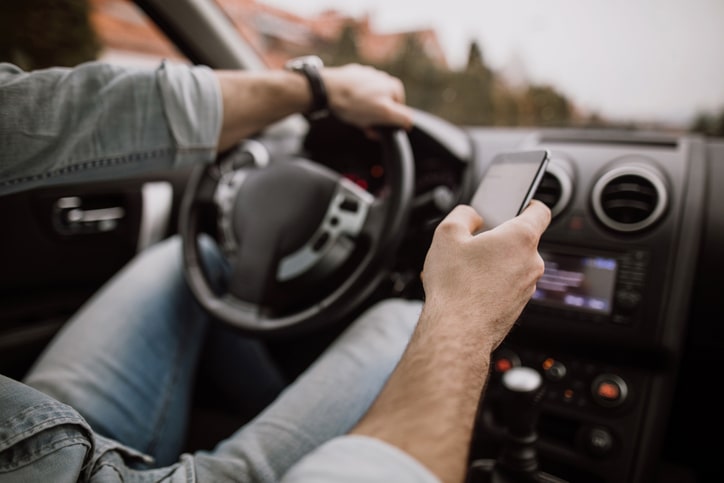
You glance down at your phone for just a moment to check a notification. Five seconds—that's all it takes. At 55 miles per hour, you've just traveled the length of an entire football field without looking at the road. In those five seconds, lives can change forever. Despite Minnesota's hands-free law being in effect for over five years, distracted driving remains one of the leading causes of crashes across the state, contributing to thousands of accidents, injuries, and deaths every year.
Understanding the Scope of Distracted Driving
Distracted driving is a factor in approximately one in four car crashes in Minnesota, making it one of the state's most persistent road safety challenges. From 2019 to 2023, distracted driving statistics show these behaviors contributed to roughly 30,000 crashes statewide, resulting in an average of 30 deaths and 205 life-changing injuries annually. The human cost behind these statistics is staggering—families torn apart, careers derailed, and futures permanently altered because someone chose to look at their phone instead of the road.
The problem isn't improving despite increased enforcement. In April 2024 alone, Minnesota law enforcement issued more than 5,300 citations for hands-free violations—a 57 percent increase from the previous year. Since the hands-free law took effect in August 2019, over 115,000 citations have been issued, and more than 175 people have lost their lives in distraction-related crashes.
The Three Types of Distracted Driving
Not all distractions are created equal, but all are dangerous. According to safety experts and the Department of Motor Vehicles, distracted driving falls into three distinct categories: visual, manual, and cognitive distractions. Understanding these categories helps drivers recognize the many ways their attention can drift from the critical task of operating a vehicle.
Visual Distractions: Eyes Off the Road
Visual distractions occur any time a driver's eyes leave the roadway. Common examples include checking a GPS or navigation system, looking at a text message, glancing at passengers in the back seat, searching for items on the vehicle floor, or watching videos on a device. Even seemingly innocuous activities like checking the speedometer or adjusting mirrors qualify as visual distractions, though brief glances are sometimes necessary for safe driving.
The danger lies in the duration and frequency of these visual diversions. Traffic conditions can change in fractions of a second—a child running into the street, a vehicle suddenly braking ahead, or debris appearing in your lane. When your eyes aren't on the road, you're essentially driving blind.
Manual Distractions: Hands Off the Wheel
Manual distractions involve taking one or both hands off the steering wheel. These include eating or drinking while driving, adjusting radio controls or climate settings, reaching for objects, applying makeup or grooming, and operating a cell phone. While drivers often believe they can safely steer with one hand, research shows that maintaining both hands on the wheel is critical for quick, decisive action in emergency situations.
In our experience, many drivers underestimate how quickly road conditions can demand immediate steering corrections. A vehicle drifting into your lane, an unexpected pothole, or a sudden turn all require full control of the steering wheel. Having just one hand available significantly increases reaction time and reduces your ability to respond effectively.
Cognitive Distractions: Mind Off Driving
Cognitive distractions occur when a driver's mental attention shifts away from driving, even if their eyes remain on the road and their hands stay on the wheel. These mental diversions include engaging in intense conversations with passengers, using hands-free devices, daydreaming or getting lost in thought, experiencing strong emotions such as anger or stress, and listening to engaging podcasts or audiobooks.
Research from the AAA Foundation for Traffic Safety shows that cognitive distractions are particularly deceiving because drivers believe they're still paying attention. However, studies reveal that mental workload from conversations and other cognitive tasks significantly impairs a driver's ability to detect and respond to hazards, even when their eyes never leave the road.
The Triple Threat: Texting While Driving
Texting while driving is uniquely dangerous because it combines all three types of distraction simultaneously. When you text, your eyes are off the road (visual), your hand is off the wheel (manual), and your mind is focused on the message content rather than driving (cognitive). This triple threat explains why research from the Virginia Tech Transportation Institute found that text messaging increases crash risk by 23.2 times compared to non-distracted driving.
Minnesota's Hands-Free Law: What You Need to Know
Minnesota's hands-free law, which took effect on August 1, 2019, strictly prohibits drivers from holding a wireless device while operating a vehicle. Under this law, drivers are prohibited from holding their phones, even when using voice commands. Additionally, they're prohibited from using their phones for video calling, live streaming, social media, gaming, watching videos, reading texts, or scrolling and typing.
Drivers can use voice-activated or single-touch features without holding their phones to make calls, send texts, listen to music or podcasts, and get directions. However, hands-free doesn't mean distraction-free—even voice-activated conversations create cognitive load that impacts driving safety.
Legal Penalties
Penalties for violating the hands-free law include fines of $100 or more for a first offense and $300 or more for subsequent violations. More seriously, if you injure or kill someone while violating the hands-free law, you can face felony charges of criminal vehicular operation or homicide.
When Distracted Driving Causes Injury: Your Legal Rights
If you've been injured by a distracted driver in Minnesota, you have legal rights and options for recovery. Proving distracted driving in a personal injury case requires establishing that the other driver breached their duty of care by engaging in distracting activities, and that this negligence directly caused your injuries and damages.
At Meshbesher & Student, P.A., we understand how to build strong cases against distracted drivers. Our attorneys work to gather critical evidence, including phone records, witness statements, traffic camera footage, and police reports that document distracted driving behavior. We've seen firsthand the devastating impact of these crashes, and we're committed to holding negligent drivers accountable.
For over 100 years, our firm has fought for injured Minnesotans, securing millions in compensation for victims of car accidents. We handle every aspect of your case, from investigating the crash and negotiating with insurance companies to taking your case to trial when necessary. Our goal is to ensure you receive full compensation for medical expenses, lost wages, pain and suffering, and all other damages resulting from the accident.
Take Action to Protect Yourself and Others
The best way to combat distracted driving is prevention. Put your phone out of reach or activate "Do Not Disturb" mode before driving. Program your GPS, adjust mirrors, and set your music before you start moving. If you need to use your phone, pull over safely to a parking area.
If a distracted driver has injured you or a loved one, don't face the insurance companies alone. Contact Meshbesher & Student, P.A. at (612) 200-1526 or reach out online to schedule a free consultation.