


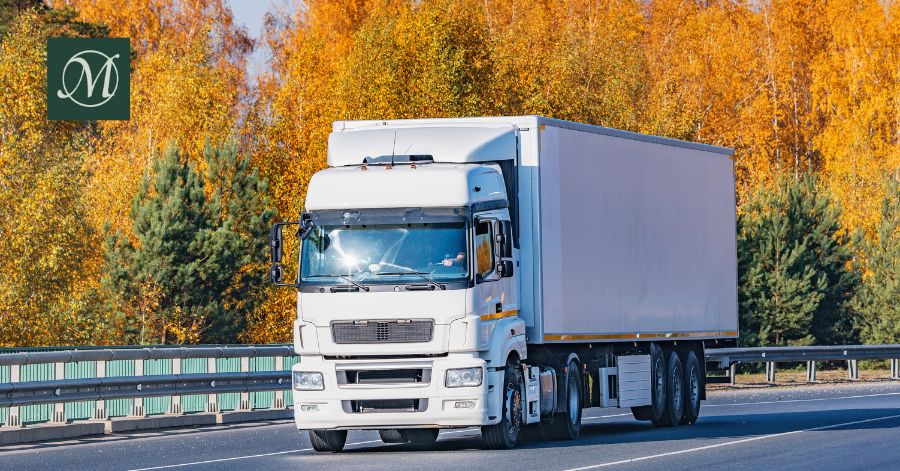
Fall in Minnesota brings vibrant autumn colors, crisp air, and shifting road conditions. While most drivers prepare for winter snow, autumn presents its own set of hazardous driving conditions. Rainfall, fallen leaves, and morning fog quietly transform everyday highways like I-35 and I-94 into hazardous corridors.
When semi-trucks and large commercial vehicles share these roads under adverse weather conditions, the risk of severe accidents increases significantly. Understanding these seasonal hazards can help you stay alert—and protect your legal rights if a truck crash occurs.
The Hidden Hazards of Fall Driving in Minnesota
1. Rain and Hydroplaning Risks
Autumn rain in Minnesota often falls on cold pavement, making roads slicker than typical summer showers. For fully loaded commercial trucks—which can weigh up to 80,000 pounds—rain dramatically increases stopping distances.
When heavy rain accumulates in lane grooves, semi-trucks risk hydroplaning, losing traction entirely. Truck drivers who fail to reduce speed appropriately for rainy conditions can easily lose control, leading to jackknife accidents or multi-vehicle pileups.
2. Wet Leaves: The Unseen Ice Equivalent
As trees shed their leaves across Minnesota roadways, they create an often-overlooked hazard. When wet leaves accumulate on asphalt, they decompose into a slick, organic film.
- Loss of Traction: Wet leaves reduce tire grip almost as severely as black ice.
- Hidden Dangers: Deep leaf piles can obscure lane markings, potholes, and road debris.
- Sudden Braking Hazards: If a truck driver brakes suddenly on a patch of wet leaves, the vehicle’s tires can lock up, sliding into adjacent traffic lanes.
Truck drivers are required by federal regulations to adjust their driving to environmental hazards. Failing to account for slick, leaf-covered roads is a form of negligence.
3. Dense Autumn Fog and Reduced Visibility
Cool fall nights combined with warmer ground temperatures frequently produce thick morning fog, particularly near Minnesota's lakes, rivers, and low-lying valleys. Reduced visibility limits reaction time for every driver on the road, but the danger is amplified for heavy commercial trucks.
Truck drivers operating in dense fog must lower their speeds and maintain greater follow distances. When trucking companies or drivers rush to meet deadlines despite zero-visibility conditions, catastrophic rear-end collisions and side-swipe crashes occur.
Holding Trucking Companies Accountable
Commercial truck drivers in Minnesota owe a duty of care to everyone sharing the road. Federal Motor Carrier Safety Regulations (FMCSR) explicitly require commercial operators to exercise extreme caution during hazardous conditions like fog, heavy rain, or slick pavement—including pulling off the road entirely if conditions become too dangerous.
When a severe truck crash occurs during inclement fall weather, trucking companies often attempt to blame "unavoidable weather conditions." However, the weather is rarely the sole cause. Poor tire maintenance, excessive speed, driver fatigue, and failing to slow down for conditions are often the true underlying factors.
Protect Your Future After a Truck Accident
If you or a loved one was injured in a collision with a commercial truck this fall, do not face the complex legal process alone. Commercial insurance carriers act quickly to protect their own interests. You deserve a legal team that acts just as aggressively to protect yours.
At Meshbesher & Student, P.A., our diligent team has decades of experience investigating complex commercial vehicle collisions across Minnesota. We fight tirelessly to secure the maximum compensation you deserve for medical bills, lost wages, and pain and suffering.
Contact Meshbesher & Student, P.A. today at (612) 200-1526 for a free, confidential consultation to review your case.